
🌍 Middle East
Reza Pahlavi Urges Iranian Military to Turn Against Ayatollahs Amid Rising U.S. Tensions
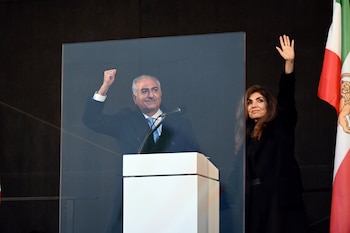
Reza Pahlavi, son of the late Shah Mohammad Reza Pahlavi, has intensified his call for Iran’s armed forces to distance themselves from the country’s clerical leadership, urging them to “stand with the people” as tensions with the United States escalate.
Speaking from exile, Pahlavi framed the current geopolitical climate — including renewed threats of possible U.S. military action — as a pivotal moment for change within Iran. He called on members of the military and security services to reject orders that suppress civilian protests and to support what he described as a peaceful national transition.

Positioning for a Transition
In recent weeks, Pahlavi has stepped up his international outreach and launched a new television channel aimed at audiences inside Iran. The platform, according to his team, is designed to promote democratic reform and provide alternative narratives to state-controlled media.
Analysts say the move reflects an effort to position himself as a central figure in any potential political transformation, particularly if internal unrest intensifies.
Expanding Protests
Meanwhile, demonstrations have reportedly spread to at least nine Iranian universities, with students voicing dissatisfaction over economic conditions, political restrictions, and regional tensions. Videos circulating online show gatherings on campuses, though independent verification remains difficult due to media restrictions.
Iran’s leadership has not formally responded to Pahlavi’s latest remarks, but officials have consistently rejected foreign involvement and dismissed opposition figures abroad as lacking domestic legitimacy.
A Volatile Moment
The convergence of domestic unrest and international pressure has heightened uncertainty across the region. While Pahlavi’s appeal to the military represents a bold rhetorical escalation, experts caution that structural change in Iran would depend on complex internal dynamics within the armed forces and ruling institutions.
As diplomatic negotiations and geopolitical maneuvering continue, the coming weeks may prove decisive in determining whether Iran faces deeper instability — or a recalibration of its political course.


0 Comments