
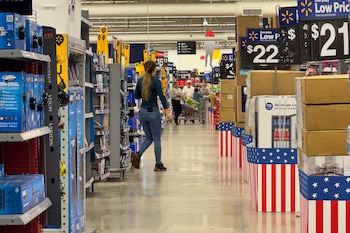
The decline in the main index and the deterioration of short-term expectations signal recession risks and a reduced willingness among American households to make major purchases.
Consumer confidence in the United States fell in January to its lowest level since 2014, according to data released Tuesday by the Conference Board. The main index fell 9.7 points from December, reaching 84.5, a figure that not only marks a low point in more than a decade but also falls below the levels reached during the COVID-19 pandemic.
According to the organization, all dimensions of the index deteriorated during the month, reflecting increased caution among households regarding major spending decisions. The measure of short-term expectations for income, business conditions, and the labor market fell to 65.1 points, the twelfth consecutive month that this value has remained below eighty, a threshold that often anticipates recession risks. Assessments of the current economic situation also declined, reaching 113.7 points.
The Conference Board's chief economist, Dana Peterson, stated that confidence "collapsed in January, as consumers' concerns about both the present and the future deepened." Peterson highlighted that mentions of prices and inflation, fuel, and food remained high, and that references to tariffs, trade, politics, the labor market, health, insurance, and armed conflicts increased.
The impact of inflation and stagnant real incomes contributed to the negative perception, according to analysts. Economist Oliver Allen of Pantheon Macroeconomics warned that the recent deterioration in the expectations index "is unlikely to be entirely misleading," given the persistence of low savings levels and the lack of income growth.
Perceptions of the labor market also weakened. 23.9% of respondents considered jobs to be "plentiful," compared to 27.5% in December. In contrast, 20.8% said jobs were “hard to get,” an increase from the previous 19.1%. This gap, a closely watched indicator for economists, narrowed to its worst level in years.
The job market has remained in a “low hiring, low firing” situation, with the unemployment rate at 4.4%. In December, employers added 50,000 jobs, little changed from the 56,000 added in November. For the year 2025, the economy generated 584,000 jobs, well below the more than two million created in 2024.
Although the U.S. economy grew at its fastest pace in two years during the third quarter of 2025, driven by household spending, the recent trend shows greater selectivity in purchases. Consumers indicated they do not plan to buy big-ticket items in the next six months, although used cars, furniture, televisions, and smartphones remain among the preferred items for future purchases.
The decline in confidence affected all age groups and income levels broadly, with a particularly sharp drop among those aged 35 to 54 and those earning more than $50,000 annually. Meanwhile, a separate measure from the University of Michigan showed a slight uptick in optimism about personal finances and the economy, contrasting with the downward trend reported by the Conference Board.
(With information from AFP, AP, and Bloomberg)


0 Comments