

The affected regions face sub-zero temperatures and new risks with the arrival of a winter storm bringing potentially heavy snowfall, while vulnerable residents remain isolated without power in communities across Mississippi and Tennessee.
Tens of thousands of people entered their sixth day without electricity on Friday, as the Carolinas and Virginia braced for a major winter storm that could bring more snow than some parts of North Carolina have seen in years.
The National Weather Service said Arctic air moving southeast would cause already cold temperatures to plummet to as low as -10°C (14°F) Friday night in cities like Nashville, Tennessee, where many people still lacked power nearly a week after a massive storm dumped snow and ice across the eastern United States.
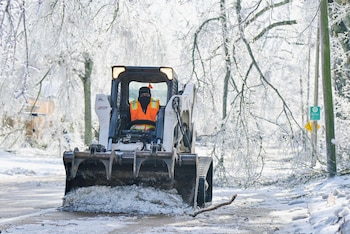
More than 230,000 homes and businesses were without power Friday morning, with the vast majority of those outages in Mississippi and Tennessee, according to the power outage tracking website poweroutage.us.
Forecasters say the sub-freezing weather will persist across the eastern United States into February, and there is a high probability of heavy snowfall in the Carolinas, Virginia, and northeastern Georgia this weekend, possibly up to 30 centimeters (1 foot) in parts of North Carolina.
Saturday night and early Sunday morning, forecasters expect strong winds accompanied by moderate to heavy snow that could create blizzard conditions for a time before the storm begins to move out to sea Sunday morning.
With the dangerous cold snap heading toward the southern United States on Friday, experts say the risk of hypothermia is increasing for people in parts of Mississippi and Tennessee who are entering their sixth day trapped at home without power and in sub-freezing temperatures.
“The longer you’re exposed to the cold, the worse it is,” said Dr. Hans House, a professor of emergency medicine at the University of Iowa. “The body can handle cold temperatures for brief periods quite well, but prolonged exposure is a problem.” The most vulnerable people—the elderly, infants, and those with underlying health conditions—may have started experiencing symptoms of hypothermia within hours of being exposed to the frigid temperatures, explained Dr. Zheng Ben Ma, medical director of the emergency department at Northwest University of Washington Medical Center. These symptoms range from exhaustion to slurred speech and memory loss.
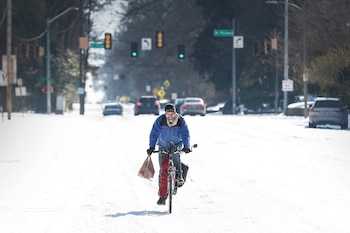
But after nearly a week, the situation is approaching a tipping point, he explained: young and generally healthy people could also begin to experience these symptoms.
“When you get to day six, seven, even ten, even a healthy, resilient person is going to be more susceptible to some of those detrimental effects of the cold,” he said.
Officials in Mississippi say it’s the worst winter storm in the state since 1994. Nearly 80 warming centers have opened across the state, which is known for being one of the poorest in the nation. Mississippi Governor Tate Reeves said National Guard troops were delivering meals, blankets, and other supplies by truck and helicopter.
In Tennessee, Governor Bill Lee said crews had distributed more than 600 heating supplies and more than 2,200 gallons (8,328 liters) of gasoline and diesel fuel.
At least 85 people have died in areas affected by the extreme cold from Texas to New Jersey. Roughly half of the deaths were reported in Tennessee, Mississippi, and Louisiana. While some deaths have been attributed to hypothermia, others are suspected to be related to carbon monoxide poisoning.
Dr. Abhi Mehrotra, an emergency physician at the University of North Carolina at Chapel Hill, said it’s important to ensure that any heat sources used indoors, including generators, do not emit carbon monoxide, which can be deadly.


0 Comments