
The White House justified the decision by citing Havana's ties to governments and organizations considered hostile by Washington, including Russia, China, Iran, and groups such as Hezbollah and Hamas.
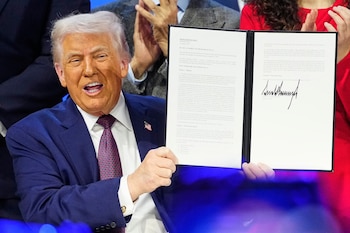
U.S. President Donald Trump signed an executive order on Thursday to impose additional tariffs on goods imported from countries that sell or supply oil to the Cuban regime.
The decision aims to cut off one of the main sources of energy support for the Cuban dictatorship and, according to the White House, seeks to protect Washington's strategic interests against what it considers Havana's "malign actions" on the international stage.
The measure stipulates that any country that, directly or indirectly, provides oil or refined products to Cuba may face additional tariffs on its exports to the U.S. market. The new system does not automatically set the tariffs, but rather enables a case-by-case evaluation process, coordinated among the Departments of Commerce, State, and the Treasury, along with other federal agencies.
In the text of the order, Trump stated that "the policies, practices, and actions of the Government of Cuba constitute an unusual and extraordinary threat to the national security and foreign policy of the United States."
The president affirmed that the Cuban regime maintains ties with actors hostile to Washington and that its behavior requires an immediate response.
"The United States will act to protect its national security and interests, holding the Cuban regime accountable for its actions," he said.
Cuba relies heavily on external supplies of crude oil and refined fuels to sustain its electricity system, transportation, and key sectors of its economy. Washington believes that this energy flow allows the Havana dictatorship to remain in power and finance activities that, according to the U.S. administration, affect regional stability.

The mechanism designed by the White House stipulates that the Secretary of Commerce will determine whether a country sells or delivers oil to Cuba, even through intermediaries or third parties. Once that determination is made, the Secretary of State will assess, in consultation with other agencies, whether it is appropriate to impose an additional tariff and to what extent. The final decision will rest with President Trump.
The order also grants the Executive broad powers to modify or suspend the measure. Trump reserved the possibility of adjusting the tariff scheme if the Cuban regime or the countries involved “take significant steps” that reduce the perceived threat or align with U.S. security and foreign policy objectives. He also warned that any trade retaliation could be met with further modifications.
The document states that the island harbors military and intelligence capabilities of countries considered adversaries of the United States. Among the examples cited is the presence of Russia's largest intelligence facility outside its territory, dedicated, according to Washington, to collecting sensitive U.S. information.
Furthermore, the text accuses the Cuban regime of providing refuge and support to organizations designated as terrorist groups by the United States, such as Hezbollah and Hamas.
“Cuba creates a safe environment for these groups to establish economic, cultural, and security ties in the region,” states the executive order, which also mentions Havana's cooperation with China and Iran.
Domestically, the Trump administration denounced systematic human rights violations on the island. The order mentions the persecution of political opponents, censorship of the press, restrictions on freedom of expression, including the internet, and retaliation against relatives of political prisoners.
“The regime tortures its opponents and corruptly profits from the suffering of the Cuban people,” the document states.

As the White House recalled, the president reversed the rapprochement promoted by the Barack Obama administration, considering that it had not generated significant political reforms on the island. In June 2025, Trump had imposed partial travel restrictions on Cuban citizens, citing Cuba's role as a state sponsor of terrorism and its lack of cooperation on immigration and security matters.
The declaration of a national emergency is based on federal laws such as the International Emergency Economic Powers Act and the National Emergencies Act, which allow the president to take extraordinary economic measures in the face of external threats.
The State Department will be required to submit periodic reports to Congress on the implementation and effects of the order.
The potential impact of the measure will depend on which countries are affected by the U.S. government's decisions and the magnitude of the tariffs imposed.
For many exporters, access to the U.S. market is key, which could create pressure to reconsider their energy ties with Cuba.
The order will take effect at 12:01 a.m. Eastern Time on January 30, 2026. From that moment on, Washington will have a new tool to condition international trade related to oil supplies to the island, in an effort to further isolate the Cuban regime on the global stage.


0 Comments