

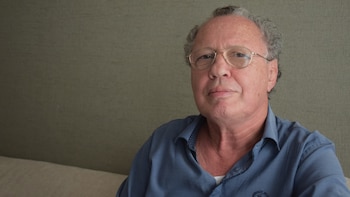
In a conversation with DEF, Israeli analyst Ely Karmon, from the International Centre for Counter-Terrorism (ICCT) in Herzliya, discussed the political situation in Iran and explained the similarities and differences with Venezuela.
The fierce repression of the massive protests in Iran and Donald Trump's threats of intervention have put the ayatollahs' regime on high alert. The recent precedent of Nicolás Maduro's capture in Venezuela is a source of concern in Middle Eastern power circles. Unlike last year's attacks on the Iranian nuclear program, any potential military action today would have to consider the subsequent political scenario.
"Regime change is much more difficult in Iran than in Venezuela," Ely Karmon, a specialist at the International Centre for Counter-Terrorism (ICCT) in Israel, told DEF in a telephone interview. According to him, "Trump is convinced that regime change is necessary." However, he added that there would be "pressure from Saudi Arabia, Qatar, and Turkey, concerned about the destabilizing consequences" in their own countries.
Regarding the internal situation, he recalled that, although around 55% of the Iranian population is Persian and of the Shiite Muslim faith, the country is populated by minorities who have their own political demands or even independence claims. Among them, he mentioned the Azeris, the Kurds, the Balochis, and the Sunni Arabs of the south. "We don't know how the minorities would react in the event of a regime collapse," the expert added.
In September 2022, the death of young Kurdish woman Mahsa Amini, while detained in a police station for not wearing the Islamic veil, unleashed a wave of protests. It was the last major challenge that shook the regime, whose authorities did not hesitate to resort to repression to regain control of the streets. These waves of protests have been recurring periodically since June 2009, when then-reformist candidate Mir-Hossein Mousavi and his "Green Movement" denounced massive fraud in the presidential elections that gave ultra-conservative Mahmoud Ahmadinejad a second term.
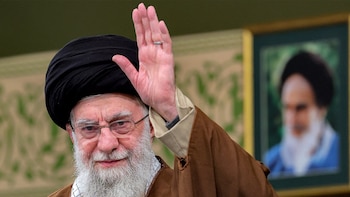
Iran and its future: the mirror of the situation in Venezuela
Comparing a possible military intervention in Iran with the operation against Nicolás Maduro in Venezuela on January 3, Karmon stated: “Trump partially decapitated the regime and negotiated with Delcy Rodríguez. The Ministers of Defense, Vladimir Padrino, and of the Interior, Diosdado Cabello, who respectively control the armed forces and the repressive apparatus, remain in their positions. There are also still Cuban agents who control the intelligence services. It would seem that Trump wants to control the oil through the current government; and then, little by little, begin to take control of the security services before calling new general elections.”
“This cannot be done in Iran,” he added, while noting that the reformist movement appears greatly weakened and without strong voices. The Israeli expert recalled the case of former president Mohammad Khatami, in power between 1997 and 2005, who was never again able to speak in public or participate in elections. The only possibility he sees is a defection of high-ranking members of the Army, who could "switch sides" and fight with their weapons against the Islamic Revolutionary Guard Corps and the Basij, an auxiliary militia formed by volunteers and responsible for internal repression.
In this regard, Karmon opined that “one of the reasons why the U.S. has not yet begun its operation is that it did not have enough information to attack and destroy communication between the different bases of the Islamic Revolutionary Guard Corps.” This is precisely what Israel did in June 2025, when it decapitated the command structure of the Revolutionary Guard, although—the analyst clarified—"it did not attack the Basij." US Strategic Interests in the Region
The war in Gaza against Hamas—also supported by Turkey—the decapitation of Hezbollah's leadership by Israel, and the fall of Bashar al-Assad's Syrian regime weakened the so-called "axis of resistance," strategically controlled by Iran. One of the key figures in this network of regional destabilization was the former commander of the Iranian Quds Force, Qassem Soleimani, who was eliminated in an operation ordered by Trump in January 2020, during his first term.
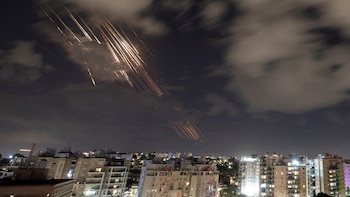
In this regard, the expert from the International Centre for Counter-Terrorism (ICCT) points out that a regime change in Tehran would mean the end of Iranian support for these forces, as well as for the Houthi movement in Yemen, which represents "a threat not only to Israel, but also to Saudi Arabia, the United Arab Emirates, and the international community." The other proxy group that Karmon referred to are the pro-Iranian militias in Iraq, with "120,000 fighters, some of whom are members of the security services of the Baghdad government."
The consequences would also be felt in the oil market, as China is currently Iran's largest customer, and its industry has been severely affected by international sanctions. "The new government could modernize the Iranian oil infrastructure, and international crude oil prices would fall," he added, while recalling that Iran shares with Qatar the exploitation of the gigantic South Pars-North Dome gas field. "A regime change would be a very profound change throughout the entire region," he summarized.
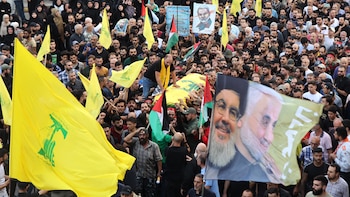
Russia, China, and the Iranian Regime in Turmoil
The Israeli analyst emphasized that "the fall of the Iranian regime would also weaken China and Russia." On a strictly political and diplomatic level, despite Tehran's supply of drones and ballistic missiles to Moscow for the Russian campaign against Ukraine and the privileged trade relationship with Beijing, Karmon stressed: "Russia and China did nothing when Iran was attacked." In this regard, citing sources from Russian academics, he said: "There is no coalition with Iran, but rather a partnership agreement."
Tehran's interests in Latin America have also been affected in recent times, with the unraveling of the anti-American axis. "Iran's relationship with the Bolivarian regimes stemmed from the influence of Hugo Chávez," Karmon recalled. The capture of Maduro and the crisis of the movement led by Evo Morales in Bolivia are two examples of this loss of relevance for Tehran's allies. Colombian President Gustavo Petro would soon join this group of leaders, as he recently moderated his rhetoric and sought to improve his relationship with Trump after a phone call they had.


0 Comments