

Various studies have analyzed resource consumption and the ecological effects associated with plant-based beverages. The case of California, which accounts for 80% of world production.
Almond milk is one of the most popular alternatives to dairy products of animal origin.
In this regard, several scientific studies have addressed how almond cultivation influences water use and biodiversity, with particular attention to regions like California, United States, where nearly 80% of world production is concentrated.
Among the aspects analyzed by science, two stand out above the rest. First, the enormous water consumption required for crop growth.
Second, the relationship between almond trees and pollination, which involves the demand for millions of bee colonies to sustain production.
When consulted by Infobae, Agustín Sáez, a researcher at the Institute for Research in Biodiversity and Environment (INIBIOMA, CONICET-UNCo), noted that there are no conclusive studies on the impact on biodiversity due to the massive transport of bees for almond tree pollination.

However, Sáez, who researched the effects of pollination on almond cultivation in California, warned about certain negative aspects, such as the stress suffered by bees during long journeys to the fields and exposure to agrochemicals: "The transport involves a very significant stressor, which can lead to increased diseases and colony losses." In other words, the death of thousands of bees involved in the production process.
The water footprint: 12 liters of water per almond
Water use emerges as one of the main environmental challenges of almond milk.
A study published in Ecological Indicators by experts from California State University indicates that almond trees in California require an average of 10,240 liters of water per kilogram of almonds, which is equivalent to 12 liters per individual almond. An article published in the Journal of Cleaner Production, led by researcher Vishal Khanpit of Nanyang Technological University in Singapore, reaffirms this finding by accounting for all the water consumed during agriculture within the water footprint (both for animal feed and plant raw materials), animal consumption, industrial processing, and even the use of resources for fuels, electricity, and fertilizers.
“It is evident from the synthesis that animal milk has a comparatively small water footprint. On the other hand, plant-based milk requires abundant water, particularly almond milk; this is likely due to almond cultivation,” the authors state.
Geographic variability is significant: counties in Northern California have a larger footprint than those in the south due to lower yields per hectare, while in the Central Valley, where production is concentrated, the availability of groundwater is key.
Initiatives in California for more sustainable production
On September 10, 2025, the University of California, the Almond Board of California, and the Department of Agriculture and Natural Resources formalized a strategic alliance by signing a memorandum of understanding on the UC Merced campus.
The agreement aims to transform almond production over the next five years, with an emphasis on automation, sustainability, and the development of new varieties, aspects considered key to the future of the sector.
In the last decade, Californian almond growers have made sustained progress in water use efficiency. According to the Almond Board of California, between 1990 and 2010, the volume of water needed for each almond was reduced by 33%.
Since 2018, the sector has aimed to reduce it by another 20% by 2025, using technologies such as moisture meters and programmed irrigation systems. By 2022, official data show that farmers had already achieved 75% of that goal, and currently more than 80% of plantations use micro-irrigation, a percentage higher than the state average. The agreement includes the creation of demonstration plots at UC Merced's Experimental Smart Farm, where advanced irrigation automation practices, regenerative agriculture, and the development of new almond varieties and rootstocks will be evaluated. Sebastián Saa, associate director of agricultural research at the Almond Board, emphasized that the goal is to accelerate the adoption of sustainable practices, optimize water and soil management, and strengthen climate adaptation strategies.
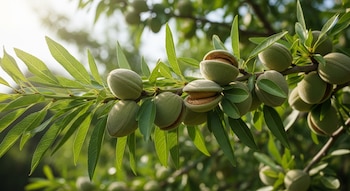
The Almond Board notes that the focus on water efficiency is not new. Since the 1980s, the introduction of micro-irrigation has allowed for the direct application of water to the roots, which...
The Almond Board notes that the focus on water efficiency is not recent. Since the 1980s, the introduction of micro-irrigation has allowed water to be applied directly to the roots, optimizing resource use and increasing productivity.
The organization also emphasizes that almond trees require a similar amount of water to other fruit trees such as pistachios, walnuts, or peaches, and highlights that while nuts require slightly more irrigation than fruits and vegetables, they provide essential nutrients, healthy fats, and protein.
Emissions, land use, and effects on bees
In terms of greenhouse gas emissions, almond milk performs more favorably than dairy milk, although it has a higher carbon footprint than other plant-based alternatives.
According to a study led by Vishal Khanpit, this beverage generates an average of 0.39 kilograms of CO₂ equivalent per kilogram, a considerably lower figure than the 1.29 kilograms recorded for cow's milk, but higher than the values observed for options such as oat, soy, or coconut milk.
Land use for almond cultivation is lower compared to dairy systems, although water consumption is much higher than for other plant-based beverages.
The intensive agricultural model of almond production also impacts biodiversity and pollinator health. According to the National Agri-Food Health and Quality Service of Argentina (SENASA), bees play an essential role in ecosystems and are directly related to most of the food that reaches our tables.
Pollination by these insects affects the quantity and quality of fruits and vegetables, including coffee, watermelon, grapes, oranges, almonds, and cherries.
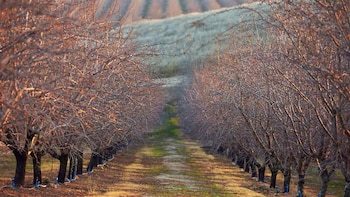
Almond production in California depends heavily on pollination by honeybees, an indispensable service for the agricultural sector. Many producers rent beehives from beekeepers, who transport bees from different regions of the country to meet the pollination demand. After the flowering season ends, most beekeepers return with their colonies to the Great Plains of the North, which facilitates the recovery of the bees and honey production.
According to an analysis by the University of Illinois, in February 2024, an estimated 2.7 million colonies were needed to pollinate 1.4 million acres of almond trees, representing 99% of the colonies existing in the country at that time.
This annual migration, driven by the economic appeal of pollination fees (which exceed $200 per colony), makes the almond blossom “the largest pollination event in the world,” in the words of the authors, and the main source of income for commercial beekeepers in the United States.
When consulted by Infobae, Marcelo Aizen, senior researcher at CONICET and the Institute for Research in Biodiversity and Environment (INIBIOMA), noted that almond production largely depends on animal pollination, especially that carried out by honeybees.
He recalled that in 2007, the so-called "colony collapse disorder" of bees was recorded in the United States, a phenomenon attributed to the stress caused by long-distance transport and, in some cases, also to water stress.
Aizen indicated that alternatives are currently being developed with genetic improvements to obtain almond varieties that are less dependent on pollinators. In particular, he mentioned the Independence variety, considered more self-pollinating.
The impact on bees and the genetic evolution of the almond tree: an expert's perspective
Sáez, a researcher at the Institute for Research in Biodiversity and Environment (INIBIOMA, CONICET-UNCo), worked for several years in California, where he conducted pollination trials on almond trees, especially with new varieties promoted as independent of pollinators. “Without bees there was production, and quite high, but if pollinators were also used, production increased by 20%. In productive terms, that's a huge amount,” he said. Sáez and Aizen are co-authors of a study published in Scientific Reports that analyzed this phenomenon.
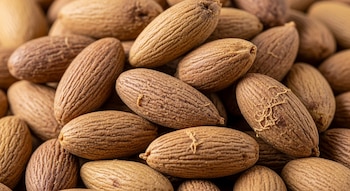
“Having more pollinators could be beneficial for wild plant species in the area, as they could benefit from a sudden increase in pollinators, in this case, honeybees,” Sáez told Infobae. However, she clarified that, so far, the available evidence does not show conclusive negative effects on biodiversity in general.
Regarding the relocation of beehives, Sáez warns that “it involves a great deal of stress for the bees,” which can lead to more diseases and a greater loss of colonies.
“Almond cultivation produces a large amount of nectar and pollen of high nutritional quality for the bees.”
Regarding the relocation of beehives, Sáez warns that “it involves a great deal of stress for the bees,” which can lead to increased disease and greater colony loss.
“Almond cultivation produces a large amount of nectar and pollen of high nutritional quality for the bees. So, once the colonies arrive, they generally develop, that is, they grow during the flowering process,” he described.
The researcher highlighted that the agricultural environment presents both risks and benefits for bees.
“While the crop offers good, high-quality nutritional resources for the bees, the environment in which they are located is often not so friendly because there is the possibility that the producer may apply some type of agrochemical to the crop that can have harmful effects on the bees,” he explained.
Among the negative points, he mentions the stress of relocation, exposure to agrochemicals, and the transmission of diseases between colonies, while among the positive aspects, he highlights the abundance of high-quality floral resources.
Regarding the reduction of dependence on pollinators in almond trees, Sáez recalls: “In its early stages, the almond tree was completely dependent on pollinators.” This changed with the development of self-compatible varieties: “What was done over the years, through genetic improvement and crossbreeding, was to achieve varieties that are self-compatible. Therefore, producers no longer needed to plant different varieties for cross-pollination; a single variety was sufficient to produce seeds.”
According to Sáez, these new varieties “produce 80% without pollinators. This means that if you add pollinators, you produce 20% more. But even without pollinators, the tree will still produce a good amount of fruit and seeds.” And he anticipates: “Surely in the coming years we will see that the new varieties that are released are not only self-compatible, like those that have been coming out in recent years, but that the levels of self-pollination are increasingly higher, and obviously the goal would be to achieve varieties where whether you have pollinators or not, the crop will produce the same amount.”
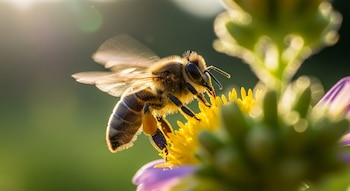
The Super Bowl of Beekeeping
From another perspective, some specialists believe that the growth of almond production in California has driven the creation of the world's largest pollination services market, known as the "Super Bowl of Beekeeping," as Brittney Goodrich and Allison Altschuler, authors of the aforementioned report from the University of Illinois, explained.
Honeybees are fundamental in this process, since most almond varieties require cross-pollination, that is, the exchange of pollen between different varieties. Each acre requires, on average, two colonies, which means that the 1.4 million acres cultivated in California require more than two million bee colonies each year.
Despite the magnitude of the system, bee mortality during almond pollination is high, a consequence of exposure to pesticides, diseases, and the stress generated by transportation.
This problem affects both introduced bees and native species. Environmentalists and beekeepers warn that this model is unsustainable and threatens the resilience of agricultural ecosystems.
Nate Donley, from the Center for Biological Diversity, compares it to "sending the bees to war," since many do not manage to return, while Patrick Pynes, a beekeeper and professor of environmental studies, maintains that bees are in decline due to an increasingly destructive relationship with agricultural production, according to statements collected by The Guardian.
According to researcher Anna Traveset of the Spanish National Research Council (CSIC), between 40% and 100% of the production of crops such as melons, watermelons, cocoa, coffee, almonds, or apples depends on pollinators. Traveset points out that factors such as changes in land use, habitat fragmentation, reduced resource diversity, increased pesticide use, the presence of invasive species, and climate change are decreasing both the quantity and variety of pollinators, exacerbating the situation.
The expert emphasizes that intensive agriculture and monocultures limit the availability of flowers, while the use of insecticides, fungicides, and herbicides affects the pollinators' habitat.
Regarding the relocation of beehives, Sáez warns that “it involves a great deal of stress for the bees,” which can lead to increased disease and greater colony loss.
“Almond cultivation produces a large amount of nectar and pollen of high nutritional quality for the bees. So, once the colonies arrive, they generally develop, that is, they grow during the flowering process,” he described.
The researcher highlighted that the agricultural environment presents both risks and benefits for bees.
“While the crop offers good, high-quality nutritional resources for the bees, the environment in which they are located is often not so friendly because there is the possibility that the producer may apply some type of agrochemical to the crop that can have harmful effects on the bees,” he explained.
Among the negative points, he mentions the stress of relocation, exposure to agrochemicals, and the transmission of diseases between colonies, while among the positive aspects, he highlights the abundance of high-quality floral resources.
Regarding the reduction of dependence on pollinators in almond trees, Sáez recalls: “In its early stages, the almond tree was completely dependent on pollinators.” This changed with the development of self-compatible varieties: “What was done over the years, through genetic improvement and crossbreeding, was to achieve varieties that are self-compatible. Therefore, producers no longer needed to plant different varieties for cross-pollination; a single variety was sufficient to produce seeds.”
According to Sáez, these new varieties “produce 80% without pollinators. This means that if you add pollinators, you produce 20% more. But even without pollinators, the tree will still produce a good amount of fruit and seeds.” And he anticipates: “Surely in the coming years we will see that the new varieties that are released are not only self-compatible, like those that have been coming out in recent years, but that the levels of self-pollination are increasingly higher, and obviously the goal would be to achieve varieties where whether you have pollinators or not, the crop will produce the same amount.”
The Super Bowl of Beekeeping
From another perspective, some specialists believe that the growth of almond production in California has driven the creation of the world's largest pollination services market, known as the "Super Bowl of Beekeeping," as Brittney Goodrich and Allison Altschuler, authors of the aforementioned report from the University of Illinois, explained.
Honeybees are fundamental in this process, since most almond varieties require cross-pollination, that is, the exchange of pollen between different varieties. Each acre requires, on average, two colonies, which means that the 1.4 million acres cultivated in California require more than two million bee colonies each year.
Despite the magnitude of the system, bee mortality during almond pollination is high, a consequence of exposure to pesticides, diseases, and the stress generated by transportation.
This problem affects both introduced bees and native species. Environmentalists and beekeepers warn that this model is unsustainable and threatens the resilience of agricultural ecosystems.
Nate Donley, from the Center for Biological Diversity, compares it to "sending the bees to war," since many do not manage to return, while Patrick Pynes, a beekeeper and professor of environmental studies, maintains that bees are in decline due to an increasingly destructive relationship with agricultural production, according to statements collected by The Guardian.

According to researcher Anna Traveset of the Spanish National Research Council (CSIC), between 40% and 100% of the production of crops such as melons, watermelons, cocoa, coffee, almonds, or apples depends on pollinators. Traveset points out that factors such as changes in land use, habitat fragmentation, reduced resource diversity, increased pesticide use, the presence of invasive species, and climate change decrease both the quantity and variety of pollinators, exacerbating the situation.
The expert emphasizes that intensive agriculture and monocultures limit the availability of flowers, while the use of insecticides, fungicides, and herbicides affects the pollinators' habitat.
In an interview with Infobae, environmental engineer Julieta Vallejo explained: “To evaluate the balance between the benefits of consuming plant-based products, such as almond milk, and their associated environmental impacts, it is essential to start with a life cycle assessment (LCA). This approach allows us to understand where the industry stands in terms of water footprint, carbon footprint, and effects on ecosystems, and to identify the links in the chain.”
“the chain where the greatest opportunities for improvement exist.”
“From an ecosystem perspective, it is important to recognize that no product is exempt from environmental impacts. While other plant-based milks, such as soy milk, may have a smaller water footprint or less dependence on pollinators, their large-scale production can also be associated with problems such as monoculture and deforestation,” said Vallejo.
He added: “Sustainability does not depend solely on the type of product, but on how it is produced, where it is produced, and on what scale. Therefore, the development of increasingly detailed and comparable life cycle analyses, along with greater transparency from the industries, is key for consumers to be able to make informed and conscious decisions when choosing these products.”
The analysis of the scientific literature shows that almond milk, although it reduces carbon emissions compared to dairy milk, presents high environmental costs due to its dependence on water and its impact on pollination.
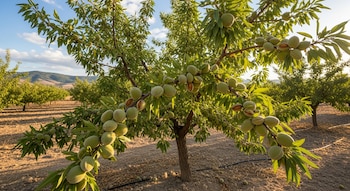
According to a report led by Andrew Berardy of Loma Linda University, published in Advances in Nutrition, the water consumption of almond milk is concentrated almost exclusively in irrigating the trees. The authors warn that the reported water footprint varies drastically between studies, a disparity they attribute both to regional differences in cultivation and to the lack of a standardized measurement methodology in scientific studies.


0 Comments