
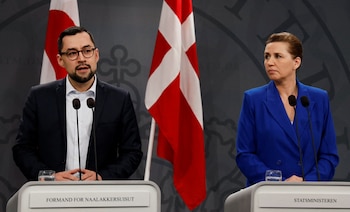
Copenhagen — Denmark has announced early parliamentary elections for March 24, as political tensions rise both domestically and internationally, particularly in relation to growing friction with the United States over Greenland.
Prime Minister Mette Frederiksen confirmed that Danes will head to the polls ahead of schedule, citing the need for renewed political legitimacy at a time of mounting external pressure and internal debate. The decision follows weeks of public protests and intensified diplomatic scrutiny surrounding Greenland’s strategic importance in the Arctic.

Greenland, a semi-autonomous territory within the Kingdom of Denmark, has become a focal point of geopolitical interest due to its vast natural resources and its strategic location between North America and Europe. U.S. interest in the territory has periodically surfaced in recent years, raising concerns in Copenhagen about sovereignty and regional stability.
The current political climate has been further strained by citizen demonstrations calling for clearer policies on national security, economic stability, and Denmark’s role within NATO. Analysts say the early election could reshape the country’s political landscape, particularly as parties debate how to balance transatlantic relations with domestic priorities.
While officials in Washington have not directly commented on the Danish electoral decision, observers note that Greenland’s role in Arctic security continues to be a sensitive topic within broader U.S.-European relations.
The March 24 vote is expected to serve not only as a referendum on domestic governance but also as a signal of how Denmark intends to navigate increasing geopolitical competition in the Arctic region.


0 Comments