

Laura F. Dogu, former ambassador to Honduras and Nicaragua, will assume leadership of Washington's contacts with Caracas and the monitoring of the human rights situation.
The United States has appointed diplomat Laura F. Dogu as Chargé d'Affaires of the Office of External Affairs for Venezuela, a move that marks the gradual resumption of relations with Caracas after years of diplomatic rupture and an unprecedented internal crisis.
Dogu's appointment comes at a key moment, with Delcy Rodríguez's administration under international scrutiny and amidst changes in the Venezuelan political landscape following the capture and extradition of Nicolás Maduro to the United States.

Laura F. Dogu is a career U.S. Foreign Service officer with extensive experience in the region and in international security matters.
Before taking on this new challenge, Dogu served as ambassador to Honduras and Nicaragua, as well as foreign policy advisor to the Chairman of the Joint Chiefs of Staff, General Dan Caine.
She also held key roles at the U.S. Embassy in Mexico and in FBI hostage recovery operations.
Dogu, who is fluent in Spanish, Turkish, and Arabic, has been recognized with awards such as the Barbara M. Watson Award for Consular Excellence and two Presidential Awards for Merit.
The diplomat will assume the position replacing John McNamara, who will continue to head the U.S. representation in Colombia.
Dogu's arrival comes as the Venezuelan regime attempts to project an image of openness towards the United States, amidst pressure for energy agreements and the release of political prisoners.
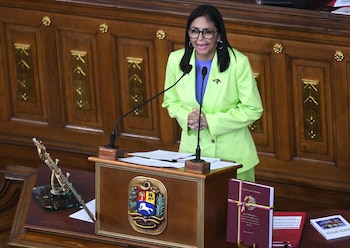
The new Chargé d'Affaires will be responsible for leading the reopening of the diplomatic mission in a country where U.S. personnel were withdrawn in 2019, following the rupture of relations promoted by the previous Chavista regime.
According to diplomatic sources, Dogu will lead bilateral negotiations alongside Secretary of State Marco Rubio and Special Envoy Steve Witkoff, who will report directly to the White House.
The context in Venezuela remains uncertain. Delcy Rodríguez has attempted to reorganize the cabinet and promote oil agreements, but her administration is marked by accusations of opacity, repression, and a lack of democratic guarantees. The NGO Foro Penal reports that, despite recent announcements of releases, as of January 19, only 143 releases have been verified, and 777 political prisoners remain in the country.

U.S. diplomacy considers it strategic to re-establish its presence in Caracas to monitor political developments and defend the interests of U.S. citizens and companies in the region. In his speech at Davos, President Donald Trump insisted that the new phase with Venezuela involves "work and dialogue without fear of differences," although he avoided directly addressing the pending invitation for Rodríguez to visit Washington.
Meanwhile, Venezuelan civil society and organizations such as the Association of Venezuelan Journalists Abroad (Apevex) insist on the need to end the persecution and censorship of journalists and media workers. The demand for justice and minimum guarantees of press freedom is added to the agenda of demands that the new U.S. head of mission will have to address during her tenure.
The diplomat assumes the challenge of re-establishing dialogue in a context of distrust and tension, with a focus on defending human rights and seeking political stability in Venezuela.
(With information from AFP)


0 Comments