
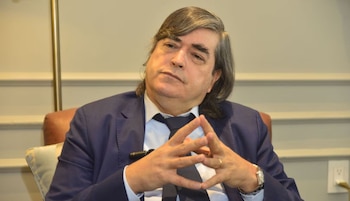
The writer and presenter surprised everyone by sharing a very personal confession about a past relationship he could never forget, generating empathy and a stir among his followers due to the intensity of his story.
Jaime Bayly once again placed his personal life at the center of public debate after publishing a column in which he reveals, without mentioning names, the deepest wound he has carried for decades.
The writer and journalist described the death of a theater actor as the most devastating blow he has faced, even more so than other family losses. In an introspective tone, Bayly recounted a romantic relationship he had in secret during the nineties, conditioned by public exposure and the social limitations of the time.
His words sparked a wave of interpretations among readers, who identified clear references in the story to a well-known figure in the Peruvian artistic world.
In his most recent column, Jaime Bayly constructed a narrative marked by guilt, nostalgia, and the feeling of an unfinished story. The author noted that, of all the people he has lost, there is one whose absence persistently torments him. "Of all my dead, the one who hurts me the most, the one who torments me the most and fills me with guilt, is the theater actor," he wrote, establishing from the outset the emotional magnitude of that loss.
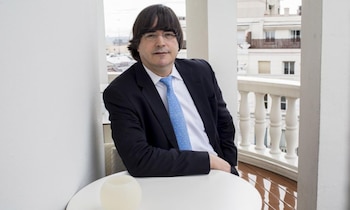
Bayly described this man as a respected artist, with a solid career on the stage and a less frequent presence in television or film. "He was a formidable theater actor. He was a beautiful man, kind-hearted, respected by his colleagues," he said, outlining an affectionate portrait that transcended the professional. Although he avoided mentioning his name, the detailed characteristics immediately sparked associations among readers.
The journalist acknowledged that the relationship developed under the shadow of secrecy. Both maintained romantic relationships with other people and shared a public notoriety that forced them to hide their romance. "We were lovers in secret, because he had a girlfriend and so did I, and because we were famous in the city where we were born," he confessed, alluding to a social context unwilling to accept that type of relationship. The column not only revealed a story of frustrated love but also the weight of the conventions that marked a generation. Bayly admitted that a lack of courage was decisive. “We didn't have the courage, nor did fate favor us, to be happy together,” he wrote, in a sentence that summarized their shared surrender and belated regret.
The Weight of Silence, Death, and Lingering Guilt
One of the most striking passages of the text directly addressed the actor's death. Bayly recounted that the artist took his own life shortly after turning fifty, an event that marked him irreversibly. “When he took his life, a part of me died with him,” he expressed, linking that tragic end to a wound that never healed.
The writer revealed that, since then, he maintains a kind of nocturnal dialogue with his deceased loved ones. In this intimate ritual, the actor occupies a central place. “I hope you're not still angry with me. Forgive me if I was indiscreet and disloyal,” he wrote, hinting at unresolved reproaches and a persistent need for absolution.
The confession gained greater intensity when he recalled that, over the years, they had become completely estranged. There were no reunions, not even as friends. The break was total, silent, and definitive, which intensified the guilt after the death. Bayly acknowledged that the estrangement sealed a story that never found a way to closure.
On social media, numerous users linked these words to public statements the aforementioned actor had made during his lifetime. In them, he acknowledged a brief relationship with Bayly during their university years and questioned the writer's decision to expose private aspects that affected his family. This background reinforced the interpretation of the column as a kind of emotional reckoning, written from a place of maturity and remorse.
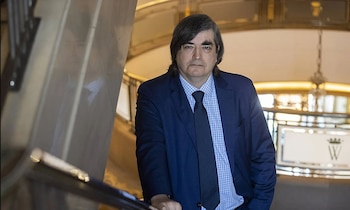
The text moved between loving evocation and self-criticism. Bayly admitted that, at the time, he felt proud of that relationship, although today he carries the weight of what was left unsaid and undone. Death transformed the silence into a permanent condemnation. Interpretations, public memory, and a love that couldn't be
The column generated a wide response among readers and followers of the journalist. Many interpreted the story as a direct reference to Diego Bertie, the Peruvian actor and singer who died in 2022, with whom Bayly had a romantic relationship in his youth. Although the author avoided confirming identities, the biographical and artistic coincidences fueled this collective interpretation.
The impact of the text also lay in the way Bayly intertwined personal memory with public expression. Throughout his career, the writer has navigated between provocation and confession, but this time he opted for a more restrained tone, marked by melancholy and vulnerability. The absence of proper names did not diminish the force of the message, but rather amplified its universal dimension.
The column's conclusion encapsulated this spirit. Bayly addressed the deceased actor directly with words full of affection and admiration. "I hope you continue acting, and receiving standing ovations, and winning awards, and living many other lives, now that you are eternal, immortal," he wrote, imagining an artistic continuity beyond death.
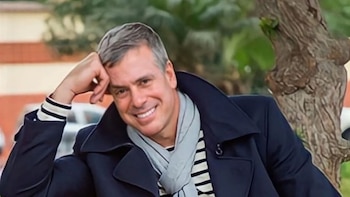
The final plea reinforced the intimate nature of the text. "Don't deny me a hug if we meet again in the afterlife," he expressed, projecting an impossible reunion in the earthly realm. That sentence resonated with readers as the synthesis of a love marked by fear, renunciation, and the impossibility of a shared life.


0 Comments